
Giannis's 71 and Miami's 259: The File Behind the Box Score Nobody Showed You
**मुख्य उत्तर:** गियानिस एंटेटोकुन्मपो ने दो मैचों में 71 अंक (35.5 प्रति मैच, दूसरे मैच में 36) बनाए, जबकि मियामी हीट ने उसी अवधि में 259 अंक खाए और 0-2 से शुरुआत की। समस्या व्यक्तिगत स्कोरिंग नहीं, डिफेंसिव ढाँचा है। **मुख्य तथ्य:** - गियानिस के 71 अंक उनके करियर की सबसे तेज़ दो-मैच शुरुआत के बराबर बताए गए। - मियामी ने दो मैचों में 259 अंक खाए, औसतन लगभग 129.5 प्रति मैच। - लीग औसत डिफेंसिव रेटिंग 113–115 के बीच है; मियामी इससे काफी नीचे है। - विरोधी टीमें मिनेसोटा टिम्बरवॉल्व्स और डेट्रॉइट पिस्टन्स थीं। - FG%, TS%, USG% और ऑन-ऑफ डेटा उपलब्ध नहीं; आंकड़े अपुष्ट हैं। **स्रोत:** स्टेज-2 विश्लेषण दस्तावेज़; मूल आलेख का लेखक, प्रकाशक और तारीख अघोषित। अधिकांश आंकड़ों के आगे "स्रोत: कोई नहीं" दर्ज है। **संबंधित प्रश्न-उत्तर:** प्रश्न: क्या गियानिस मियामी हीट के खिलाड़ी हैं? उत्तर: उपलब्ध सामग्री ऐसा दर्शाती है, लेकिन यह उनके स्थापित मिल्वॉकी कार्यकाल से टकराता है और इसकी पुष्टि किसी दस्तावेज़ से नहीं होती। प्रश्न: मियामी की असली समस्या क्या है? उत्तर: डिफेंसिव रेटिंग का फ्रैंचाइज़ी-रिकॉर्ड स्तर, जो रोस्टर-गहराई की कमी और स्कीम-कम्युनिकेशन विफलता दोनों का संकेत है। प्रश्न: आगे क्या देखा जाना चाहिए? उत्तर: अगले 8–10 मैचों की डिफेंसिव रेटिंग, गियानिस और दूसरे बड़े खिलाड़ी की मिनट्स को अलग रखा जाना या नहीं, और कोच-स्टार की सार्वजनिक भाषा में बदलाव।
Giannis's 71 and Miami's 259: The File Behind the Box Score Nobody Showed You
Two things were open on my desk. On one side, Miami's two-game box score — 71, 259, 0-2. On the other, the column where a source name should have been. The box score was full. The column was empty.
Thirty-six in Game 2. Seventy-one across two games, 35.5 a night, and the claim attached to it is that this equals the fastest two-game scoring start of his career. In that same two-game window Miami gave up 259 points, roughly 129.5 per game, described as the worst two-game defensive total in franchise history. One team, one stretch, records at both ends.
I have watched League Pass at odd hours for years, and my habit is to check three lines of a box score before touching a highlight — attempts, free-throw rate, defensive rating. This time the third line was missing. What I have in front of me contains the score, the mood, quotes from the coach and the star, and not one of FG%, TS%, usage rate or on/off. I went past the scoreboard into the record itself and found a locked gate.

Context: a paper contender sitting at 0-2
Miami's defensive identity has been sold in this league like a brand. Erik Spoelstra's teams have lived around the top ten in defensive rating year after year, and that identity never rested on one superstar's block — it rested on rotation discipline, help-line timing and the length of role players. The picture now is the inverse. League-average defensive rating sits somewhere between 113 and 115; this team is conceding 129.5 a game.
The first two opponents were Minnesota and Detroit. Losing to Minnesota, a defensively minded team, proves little. Losing to Detroit — young, ascending, rookie-scale heavy — is the diagnostic result. A paper contender dropping that game removes the schedule excuse entirely.
Spoelstra's own language stayed clean through it: "not on our timeline," "we're getting to know each other right at the beginning of the season," "adversity brings a team together." That is a coach managing integration, not a crisis. Giannis matched the register — "shock," then "urgency," then "trust one another," then "take good things from the game." No blame leaked from either side.
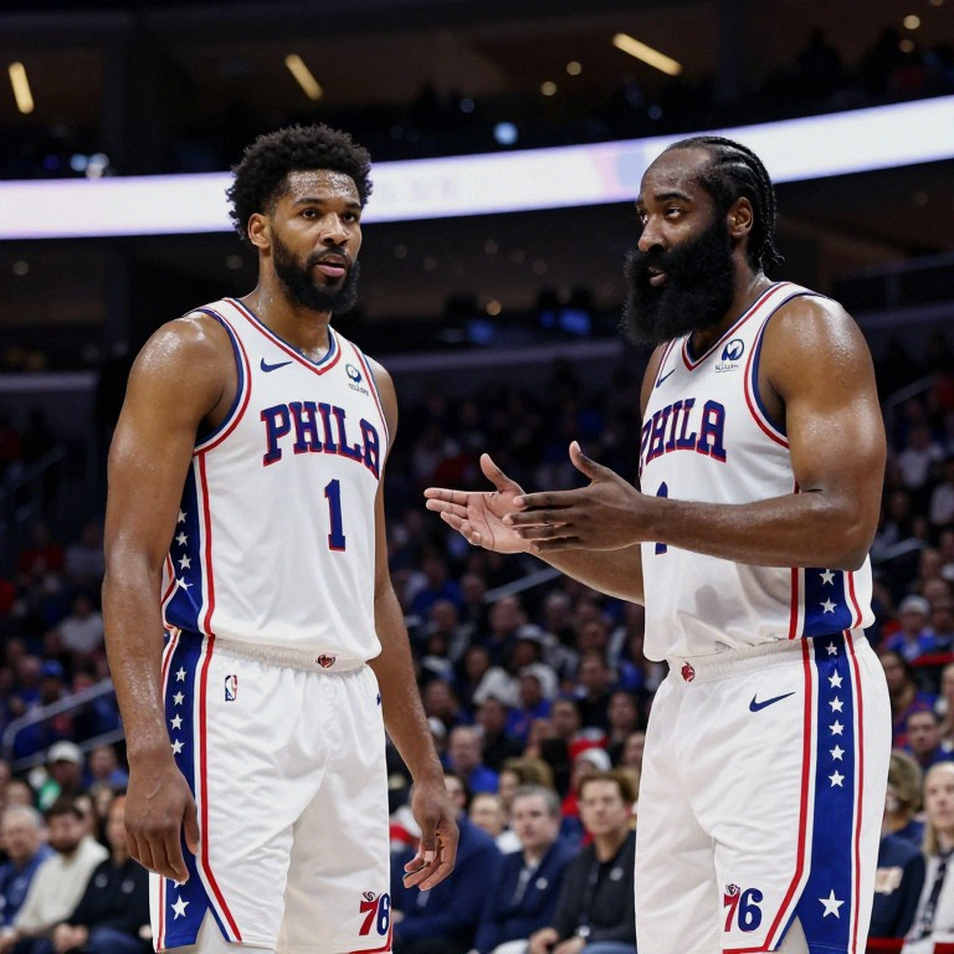
One thing has to be recorded here, because it is the foundation of everything below. The material in front of me treats Giannis Antetokounmpo as a Miami Heat player — "Heat history," "his era there" in Milwaukee in the past tense. That collides with the established fact of an entire career spent in Milwaukee. I am putting the contradiction up front because every number that follows stands on it.
Core: two ends, two different accounts
This team is asymmetric — elite at one end, franchise-record at the other. The diagnosis therefore has to centre on why the defence broke, not on how Giannis scored. A 259-point two-game total is not "bad form"; it sits at the extreme where scheme communication failure and personnel shortage are usually compounding each other.
Look at the other end. Seventy-one points, thirty-six in Game 2, matching a career-best two-game start. That is the most concrete and most verifiable number in the entire file. There is also a genuine novelty flag: this is the first time he has played both of a season's first two games and his team has opened 0-2. The change is in the team context, not the player.
Then the audit stalls. Without knowing how many shots produced those 36 points, neither "empty stats" nor "brilliant start" can be said. True shooting, effective field-goal percentage, usage, on/off — all four are absent. The audit only became useful when I stopped counting players and started counting doors, and here the door is plainly visible: an article about a 36-point night that never mentions attempts is itself information.
The question the original material never touches is spacing. If Giannis starts alongside a traditional big — Bam Adebayo being the obvious candidate — the opposing team gets two clean options: sag off one and pack the paint. Two sub-elite spacers compress the driving lane and turn the superstar into a reluctant jump shooter in crunch time. That runs straight against five-out modern norms. Transparency: Bam's presence is inferred from roster context, not stated in the source.
The third door is the cap sheet. A supermax acquisition is usually paid for in three-and-D wings and rim protection. Two max contracts squeeze everything beneath them into minimum and mid-level money. If the team sits beyond the second apron, the in-season repair routes close too — no mid-level, no salary aggregation in trades, no buyout market. This is the pattern the box score never prints: you can buy the star; you cannot buy the ladder. The apron regime exists precisely to kill the belief that money can cover the mistake.
Contrarian: the reassurance frame, and a source with no name
The cleverest move in the piece is the LeBron precedent — the 63-point two-game start in 2026-12 that ended in a title. It is historically true and emotionally soothing. It is narrative repair, not analysis. That 2026-12 core was known and stable; this team describes itself as still getting to know each other. Fitting both into one analogy is convenience, not evidence.
Spoelstra's "not on our timeline" is process language, and process language sounds professional early. The risk is that by game ten the same sentences sound like excuses. In professional sport that transition is fast, and coaches know when the right question arrives in the media room.
The loudest red flag is not the defence. It is the source. No author, no date, and most data points marked "source: none." And above that sits the premise contradiction — Giannis presented as a Heat player. Three readings are possible: a hypothetical or post-trade scenario, a simulated league, or a straight extraction error. The material supports none of them. A transfer rumour is a price tag wearing a story, and I always check the stitching. Here there is no stitching to check.
Which produces the uncomfortable point: if this really is a post-trade scenario, the biggest story is the transaction the article never mentions — picks surrendered, salary matched, role players shipped. And if no such transaction happened, everything else is standing on a floor that has already given way.
Takeaway: three things the next ten games will settle
The next checkpoint is defensive rating, and the window is clear — the next eight to ten games. A return toward league average validates the gelling story and makes this start mere rust. A bottom-five stay changes the diagnosis: not a scheme problem but a roster-construction problem, and therefore a season-long one.
Watch whether the coach staggers Giannis and the second big. Staggering is a tacit admission that the fit is not trusted. Watch the language too — the day "process" gives way to "frustration," the clock inside the locker room has started.
And first, find the file with a name in the source column. Because while the door stays locked, I am not writing a piece about the light inside — however clean the scoreboard looks.