
LIV Golf's bankruptcy story isn't in the scorecard — it's in the balance sheet
**मुख्य उत्तर**: LIV Golf ने 24 जून 2026 को CEO स्कॉट ओ'नील को 6.375 मिलियन डॉलर का रिटेंशन पेमेंट दिया — दिवालिया संरक्षण की अर्जी से 76 दिन पहले। घोषित संपत्ति 100–500 मिलियन डॉलर और देनदारी 500 मिलियन–1 अरब डॉलर बताई गई, जो बैलेंस-शीट दिवालियापन का संकेत है। **प्रमुख तथ्य**: - 8 सितंबर 2026 को LIV Golf ने चैप्टर 11 के तहत दिवालिया संरक्षण की अर्जी दायर की। - स्कॉट ओ'नील का कुल पारिश्रमिक 12 सितंबर 2025 से 28 अगस्त 2026 के बीच 13.6 मिलियन डॉलर से अधिक रहा। - वरिष्ठ अधिकारियों का कुल रिटेंशन पूल करीब 15.6 मिलियन डॉलर; ओ'नील की हिस्सेदारी लगभग 41 प्रतिशत। - ग्रेग नॉर्मन का सितंबर 2025 में हुआ निकास 9.4 मिलियन डॉलर से अधिक का रहा। - "LIV 2.0" के लिए पुनर्गठन वित्त अधिकतम 300 मिलियन डॉलर; शुरुआती अंतरिम क़र्ज़ केवल 4 मिलियन डॉलर। **स्रोत**: LIV Golf की चैप्टर 11 अर्जी के अदालती दस्तावेज़, अर्जी दिनांक 8 सितंबर 2026। **संबंधित प्रश्न-उत्तर**: Q: ओ'नील का रिटेंशन पेमेंट क़ानूनी रूप से महत्वपूर्ण क्यों माना जा रहा है? A: क्योंकि यह फ़ाइलिंग से केवल 76 दिन पहले, 90-दिन की विंडो के भीतर किया गया, और लेनदार समितियाँ आम तौर पर ऐसे भुगतानों की जाँच करती हैं। Q: LIV Golf का पुनर्गठन किसके साथ आगे बढ़ रहा है? A: अदालत ने बीसी पार्टनर्स के साथ पुनर्गठन की राह खोली है, न कि सऊदी संप्रभु कोष के साथ। Q: LIV 2.0 का वित्तीय दायरा कितना बताया गया है? A: अधिकतम 300 मिलियन डॉलर, जो "तक" वाला आँकड़ा है और कोई प्रतिबद्ध राशि नहीं।
The loudest thing in the court documents was not a shot. It was a date: June 24. That day LIV Golf released a $6.375m retention payment to its chief executive, Scott O'Neil. Seventy-six days later, on September 8, the company filed for Chapter 11 bankruptcy protection.
I have not read golf as a scorecard for eighteen years. In 2026 I spent four days in the press tent at Delhi Golf Club — for a favour, spotting approach shots for the European Tour's world feed. I logged 1,142 approaches across forty-one pages by hand and spent three evenings in the caddie yard instead of the media centre. Since that week golf has been, for me, a question of access: who gets to play, who carries the bag, what a green fee costs.
I went for the favour. I stayed for the lesson.
Now the same file has opened a different question, and it is a balance-sheet question, not a golf one.
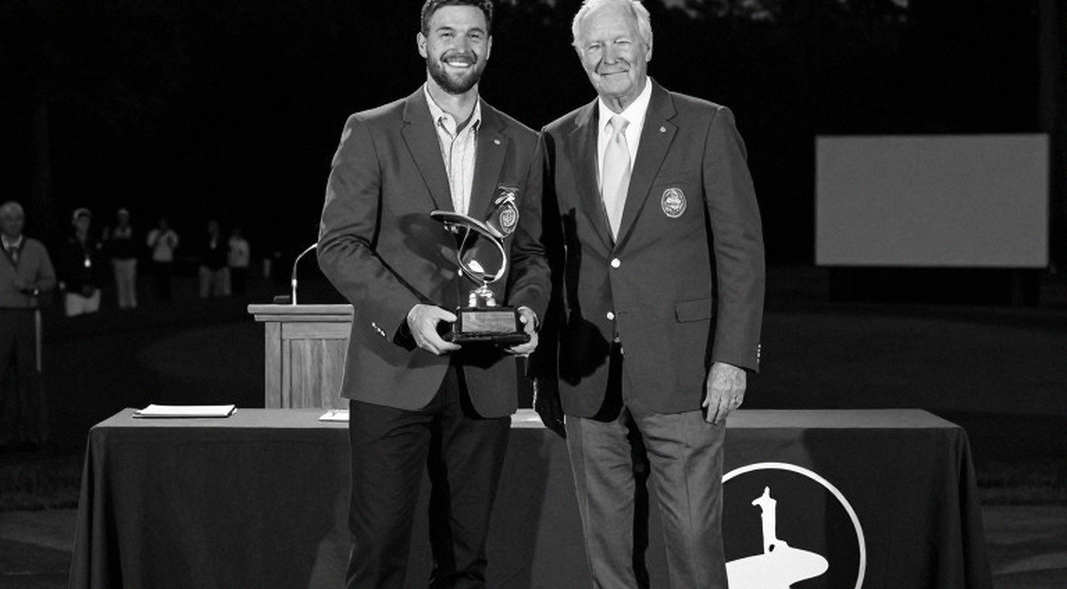
The figures surfacing from the filings are about management, not play. O'Neil's total compensation for the period September 12, 2026 to August 28, 2026 is reported at more than $13.6m, including a bonus of roughly $2.7m on February 13. The aggregate retention pool for senior executives came to about $15.6m — meaning O'Neil alone took roughly 41 per cent of it.
The previous leadership did not leave cheaply either. Greg Norman departed in September 2026 at a reported cost above $9.4m — about $5.8m in settlement and about $3.6m in bonus. Chief financial officer David Phillips took more than $3.3m; chief legal officer John Ruzich about $2.6m.

One fact anchors the whole story: more than $23m was spent on two leadership transitions inside a single year — the same year the company entered bankruptcy protection. That is not a cost signal; it is a governance signal. When a chief executive alone takes 41 per cent of a retention pool, the message is not that costs are being cut. The message is that a small group has been secured across a filing.
The rest of the arithmetic is harsher. Declared assets are put between $100m and $500m; declared liabilities between $500m and $1bn. On a midpoint construction that implies negative equity of roughly $400m to $450m. Three of the four possible range combinations show insolvency; only the $500m-assets against $500m-liabilities corner is solvent at all.
But the most under-read figure in the document is not that. It is $4m — the initial loan extended so the company could keep operating through the process. An operator that staged multi-million-dollar events across several continents needs outside money to fund a few weeks of existence. That is a liquidity crisis, not the preparation of a new strategy.
And the envelope for the mooted “LIV 2.0” is capped at as much as $300m. That is a ceiling, not a commitment.
Now the part where the easy story and the evidence diverge. The easy story will be: LIV failed because the golf wasn't good enough. There is no such evidence here. No field strength, no scoring data, no attendance, no broadcast numbers. Not one performance metric appears. What appears is a count of capital.
The real inversion is that LIV's own pitch became its liability. A model that sold guaranteed money — 54 holes, no cut, a signature fee — created fixed obligations against discretionary revenue. In bankruptcy, guaranteed contracts now sit in the unsecured creditor class. The players have, by process, become creditors of the system that recruited them.
And the decisive fact is not the bankruptcy. It is the identity of the lender. The court cleared a restructuring route with BC Partners, an outside private-capital provider — not the Saudi sovereign fund that founded the project. In that single name, the era in which LIV's spending had no visible ceiling appears to be closing.
It also inverts the fight that has run since 2026. Then the frame was sovereign capital against the traditional tour. Now it is the traditional tour plus private equity against a distressed asset. The court is not ruling on the quality of LIV's golf; it is ruling on its accounts. And the accounts say the scale LIV sold was never entirely its own.
I keep an older reckoning of that point in my own file. In November 2026, at DLF Golf & Country Club, eighteen-year-old Aditi Ashok won the Hero Women's Indian Open in front of maybe three hundred people. That night I called it from a cupboard-sized booth in Salford with no stat pack prepared at all.
Three hundred people saw it. That was the whole point.
Golf's honest unit has always been small. An operation that describes itself as large is carried by narrative, not by capital — and narrative never balances a balance sheet.
By the end of the month it will be settled whether LIV 2.0 proceeds or the estate winds down. That deadline now sits in the October calendar, and the 2027 schedule, the player contracts and the broadcast deals all rest on it. The filing came after the season rather than mid-season, which is operationally sensible. But players will learn their next status in the same window in which contracts are normally settled.
Somewhere between the scoreboard and the story, there is a person. In this case it is not O'Neil and not Norman; it is the player who was recruited on a promise of guaranteed money and who now stands in a queue.
Every sport teaches the same thing in a different accent — and here the lesson is that an organisation which cannot count its costs cannot keep its promises either.
Where I might be wrong: the asset ranges are broad, and golf's team IP and media rights are subjective to value. Some assets may sell above the range, and the picture may not be as clean as these numbers suggest. I have learned to distrust my own first paragraph. Half the numbers are still missing, and the decision rests with a court.